
Fish Street: Worcester's Most Overlooked Corner
LOCAL HISTORY · WORCESTER CITY CENTRE · WORCESTER WALKS
A short street with a very long memory — salmon, slums, medieval guilds, and a hall that stood for seven centuries.
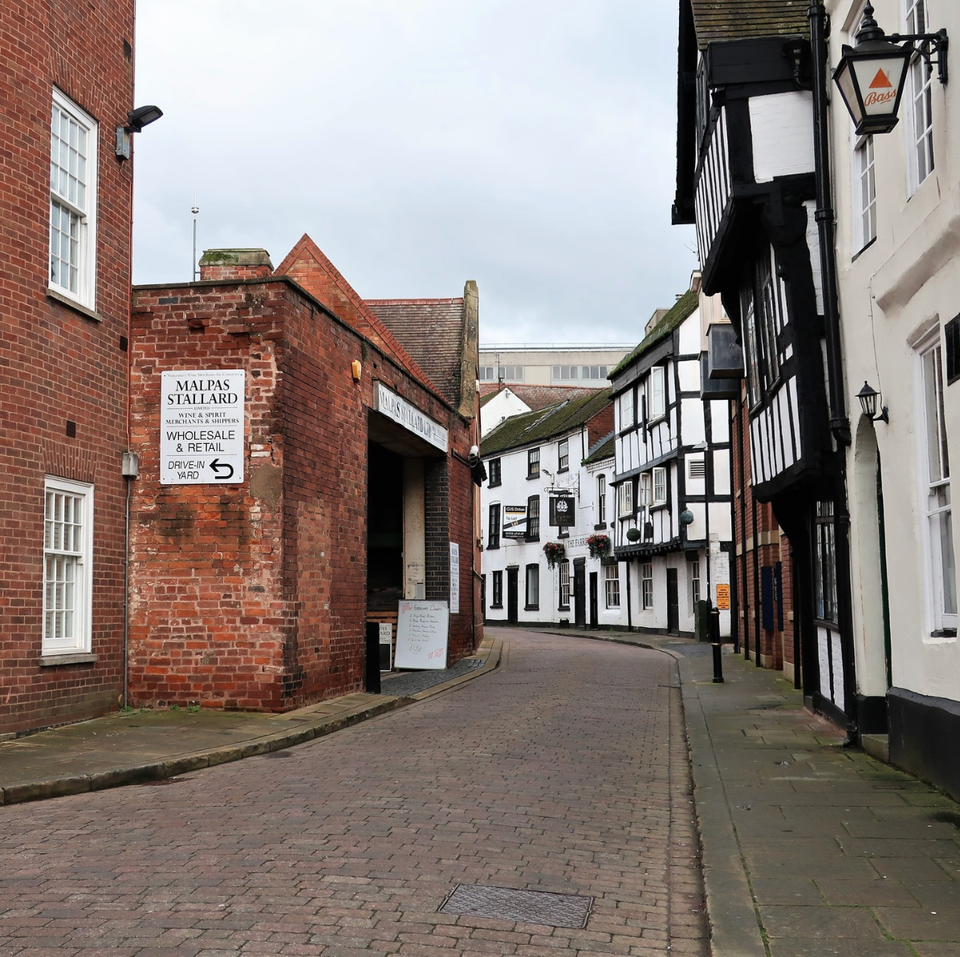
If you've ever cut through Fish Street on your way between the High Street and Deansway, you've probably barely given it a second glance. Most people don't. It's the kind of street that gets used, not noticed. But slow down for a moment, look at the buildings around you, and you're standing in one of the oldest, most layered corners of the entire city. This little street has seen more history than most places three times its size....and it is absolutely worth exploring properly.
Let's start with the name itself, because Fish Street wasn't always called Fish Street. In its earliest days it went by the rather tongue-twisting name of Corvisers Lane — a reference to the shoemakers and boot-makers (known as cordwainers or corvisers) who originally traded here. By the medieval period, however, the cobblers had moved on and the fishmongers had moved in, and the street took on the identity it holds to this day.
<(((°> <°)))>< <(((°> <°)))>< <(((°> <°)))>< <(((°> <°)))>< <(((°> <°)))><<(((°>
The Grand Hall at the Heart of It All
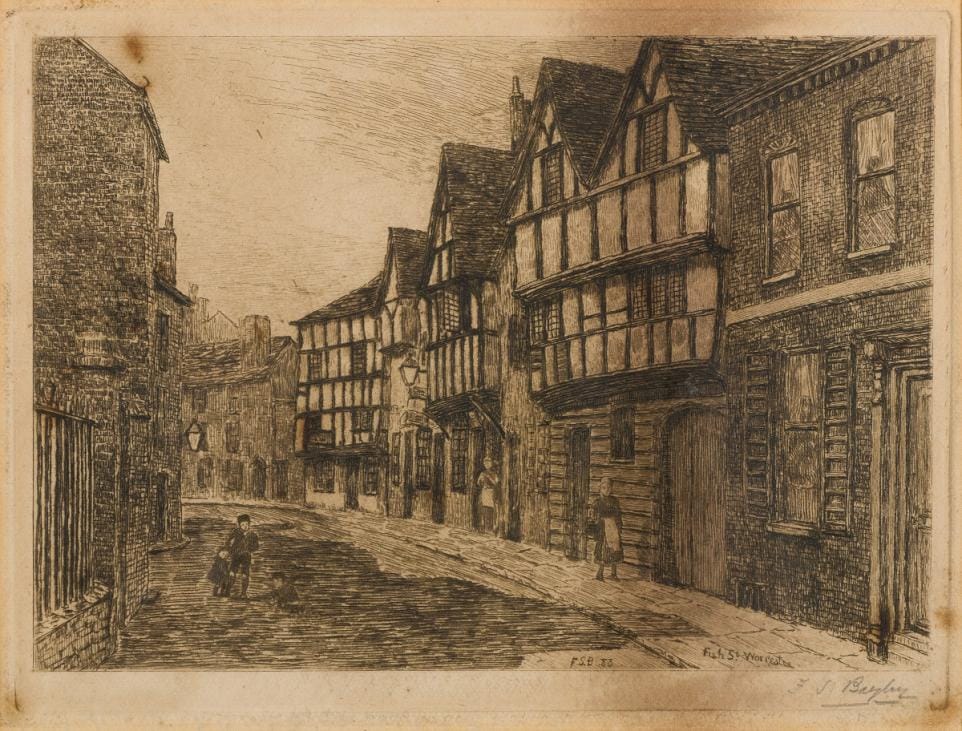
If you'd walked down Fish Street seven hundred years ago, the building that would have stopped you in your tracks was the Fishmongers' Hall, a magnificent half-timbered structure that anchored the centre of the street and dated all the way back to the 13th century. It was, by all accounts, a handsome thing: carved oak barge boards, fine timber framing, the kind of building that spoke of civic pride and commercial prosperity.
Sadly, its end was rather less dignified. By the Victorian era the hall had been carved up into nine cramped, poorly maintained tenements, essentially slum housing squeezed into the bones of a medieval landmark. Beneath layers of whitewash, four beautifully carved panels were uncovered in its final years, and were sold to Haughton's, the ecclesiastic sculptors who worked nearby. The building finally collapsed at the very start of the 20th century, taking no lives with it, but leaving behind only memory... and the extensive wine cellars that still run beneath the street today.
"In Henry VII's day, every fisher paid one penny a day for selling his goods from the King's boards — and a halfpenny to the city swordbearer for every salmon sold."— Worcester People & Places
Rules, Fines, and Very Fresh Fish
The fish trade in medieval Worcester was anything but a free market. Medieval guilds kept like businesses tightly together — think of it as the original trading estate — and the fishmongers of Worcester were no exception, restricted to Fish Street and its surrounds. The rules were strict, and the penalties for breaking them were steep. By 1544, a fishmonger caught selling outside the Parish of St Alban's could find themselves facing a fine of 100 shillings, an enormous sum at the time.
Quality control was taken just as seriously. Before any fish could be sold, an alderman had to walk the street and personally inspect — and smell — the goods on offer. Later, two appointed fishmongers were specifically chosen to check that incoming stock was fit for human consumption. Any fish deemed unfit was confiscated and given to prisoners and the poor. Even the simple act of setting up a pitch cost a penny per stall, with half a penny going directly to the city's swordbearer for each salmon that changed hands. It was an impressively organised — if wonderfully bureaucratic — operation.
The most common catches pulled from the nets cast on the River Severn here were salmon and shad. Both species later all but vanished when locks and weirs were installed on the river, blocking their route upstream to spawn. Thankfully, the addition of fish passes in more recent years has brought these species back to Worcester's stretch of the Severn.
<(((°> <°)))>< <(((°> <°)))>< <(((°> <°)))>< <(((°> <°)))>< <(((°> <°)))><<(((°>
Two Churches, Two Very Different Stories
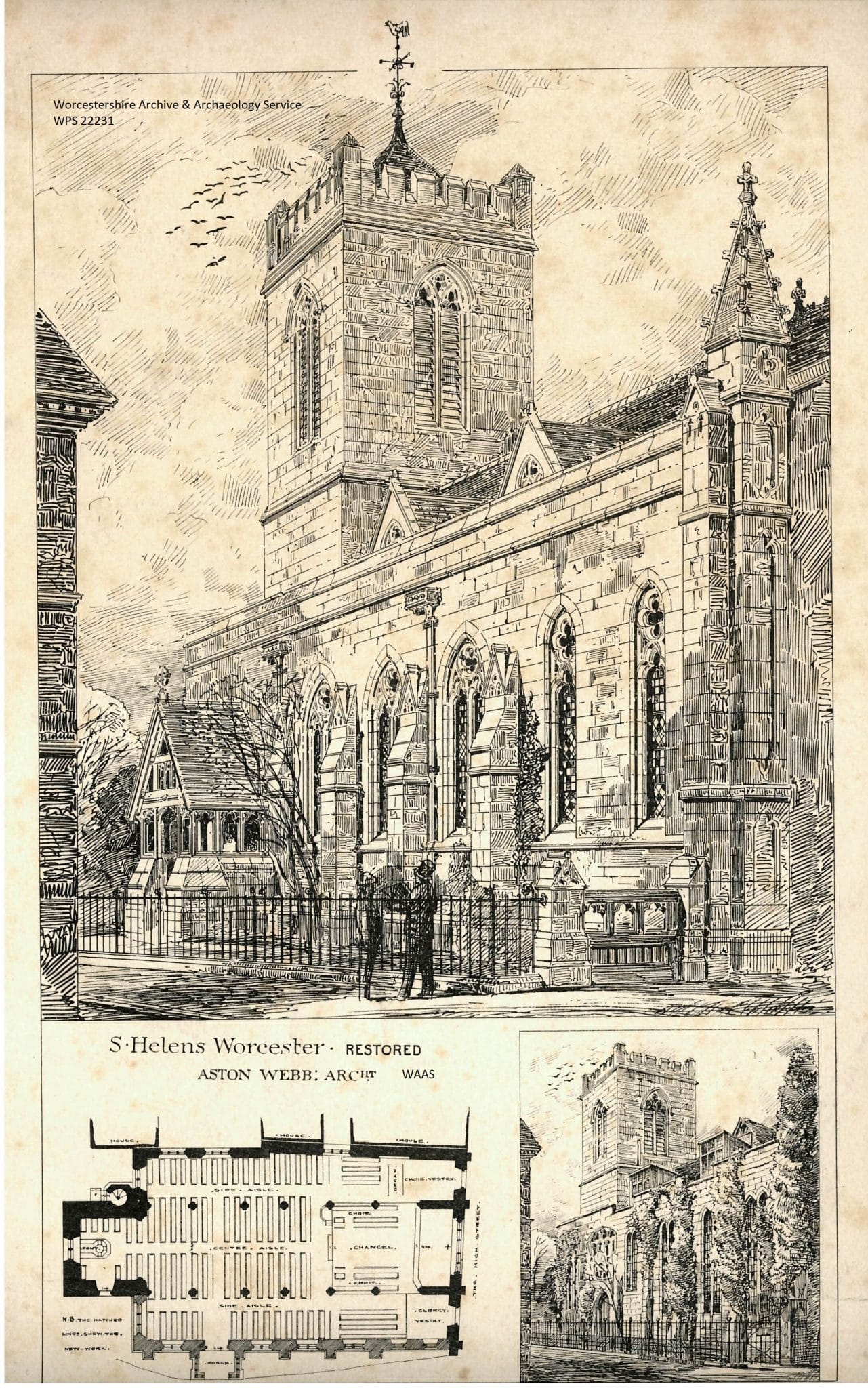
Fish Street was once bookended by two ancient churches, and both are still standing — though their stories couldn't be more different. At the eastern end, where the street meets the High Street, stands St Helen's. Its site was used for Christian worship even before the Cathedral, making it one of the oldest places of prayer in the entire city. Over the centuries it has served many purposes: a YMCA club during the Second World War, and later the County Record Office. The old Rectory nearby was used as a Sunday School for a time and still stands close by.
At the western end stands St Alban's, another ancient church significantly altered in the 18th century. Today it serves an important and very human purpose — it is home to Maggs Day Centre, one of Worcester's most vital homeless shelters. The centre offers warmth, food, and support to some of the city's most vulnerable people, operating out of a building that has been standing for centuries. It's a quietly moving place, and one of our favourite corners of old Worcester.
VISITOR QUICK FACTS
- Two pubs survive on the street: the Farriers Arms and The Plough — both with roots in the 17th–18th centuries
- Tudor House (opposite Stallard's) was built in 1620 for Humphrey Tyrer
- Stallard's wine cellars beneath the street have operated since at least the 1800s
- The construction of Deansway in the 1930s physically split Fish Street into two
- Rumours of underground tunnels to the Quayside have never been confirmed
<(((°> <°)))>< <(((°> <°)))>< <(((°> <°)))>< <(((°> <°)))>< <(((°> <°)))><<(((°>
Pubs, Wine Cellars, and a Persistent Rumour
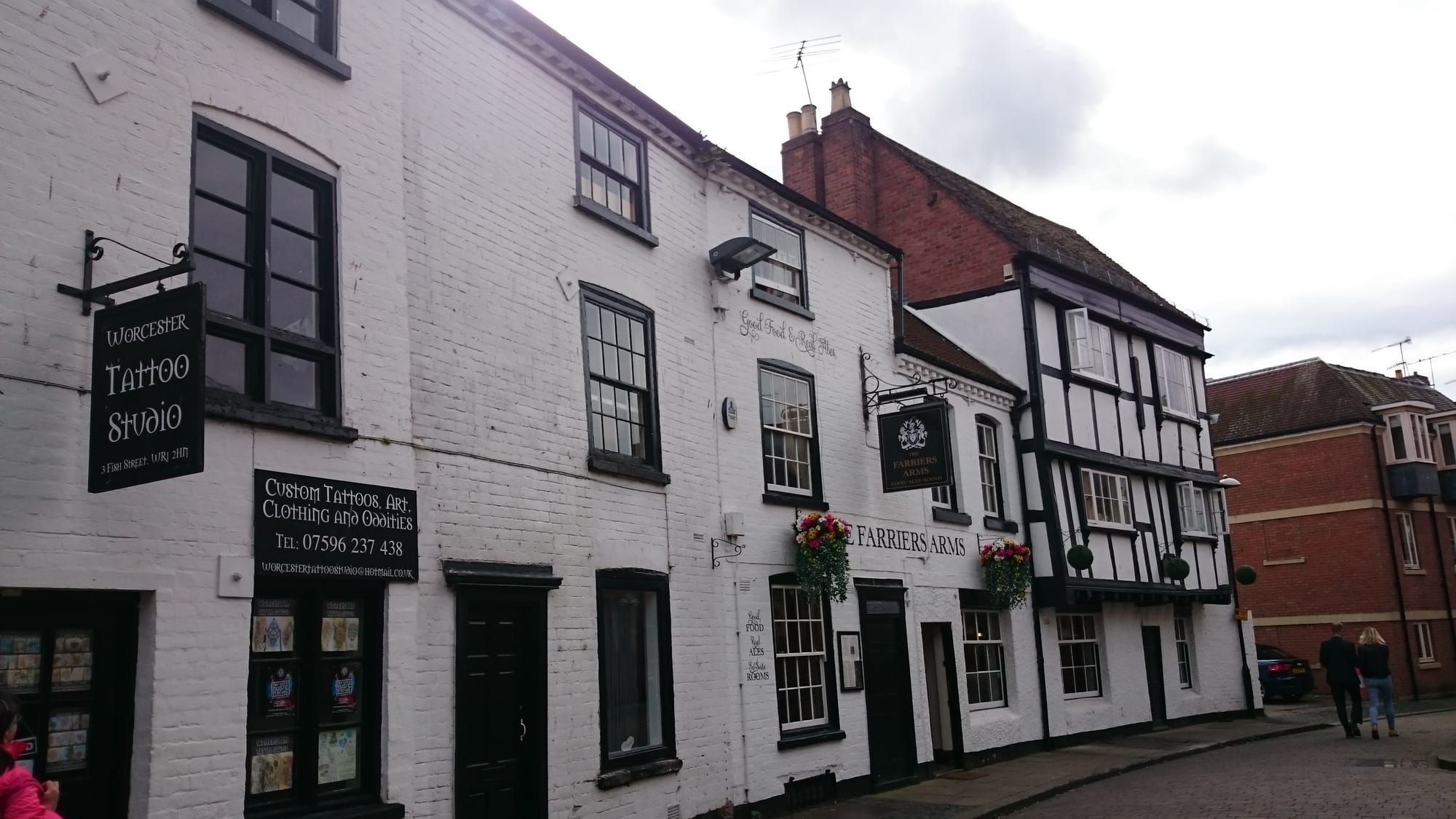
For all its medieval gravity, Fish Street was also a place people came to enjoy themselves. At its most bustling, the street was home to several pubs. Two survive today: the Farriers Arms and The Plough. The Plough has been here since at least the 1700s, possibly earlier. The Farriers was formed from two adjoining houses much altered over the 17th and 18th centuries, and has traded under a handful of different names over the years — including the Archangel and the Oddfellows Arms. Both are well worth a stop.
Beneath it all (literally) lie the wine cellars of Josiah Stallard, in operation since at least the 1800s. The cellars are unusually large, made possible by the street's closeness to the old Quayside. In 1969 the business became Malpas Stallard Ltd, wine and spirit merchants. Their depth and proximity to the river have long fuelled whispered rumours of underground tunnels running down to the quay. But despite the hearsay, none have ever actually been discovered. Perhaps that mystery is part of the street's charm.
Directly opposite stands Tudor House, built in 1620 for one Humphrey Tyrer — its name a slight misnomer, given that the Tudor era had already ended by then. And the most modern building on the street, Fairfax House, was constructed at the close of the 20th century, completing a street that somehow spans nearly 800 years of architecture in a few hundred metres.
<(((°> <°)))>< <(((°> <°)))>< <(((°> <°)))>< <(((°> <°)))>< <(((°> <°)))><<(((°>
A Street That Has Kept on Changing
The single biggest transformation Fish Street ever underwent came in the 1930s, when the construction of Deansway — in much the form we see it today — literally sliced the street in two. Later, the arrival of the Heart of Worcestershire College beside St Alban's reshaped the western end once more. The street has been crowded, divided, collapsed, rebuilt, and repurposed over seven centuries — and it is all the more fascinating for it.
So next time you find yourself walking through Fish Street, perhaps slow down. Look up at the timber framing, notice the names above the doors, pop into one of the old pubs, and spare a thought for the medieval fishmonger who once paid his halfpenny to the city swordbearer on this very spot. Worcester has no shortage of history, but Fish Street might just be the most concentrated slice of it in the entire city.